
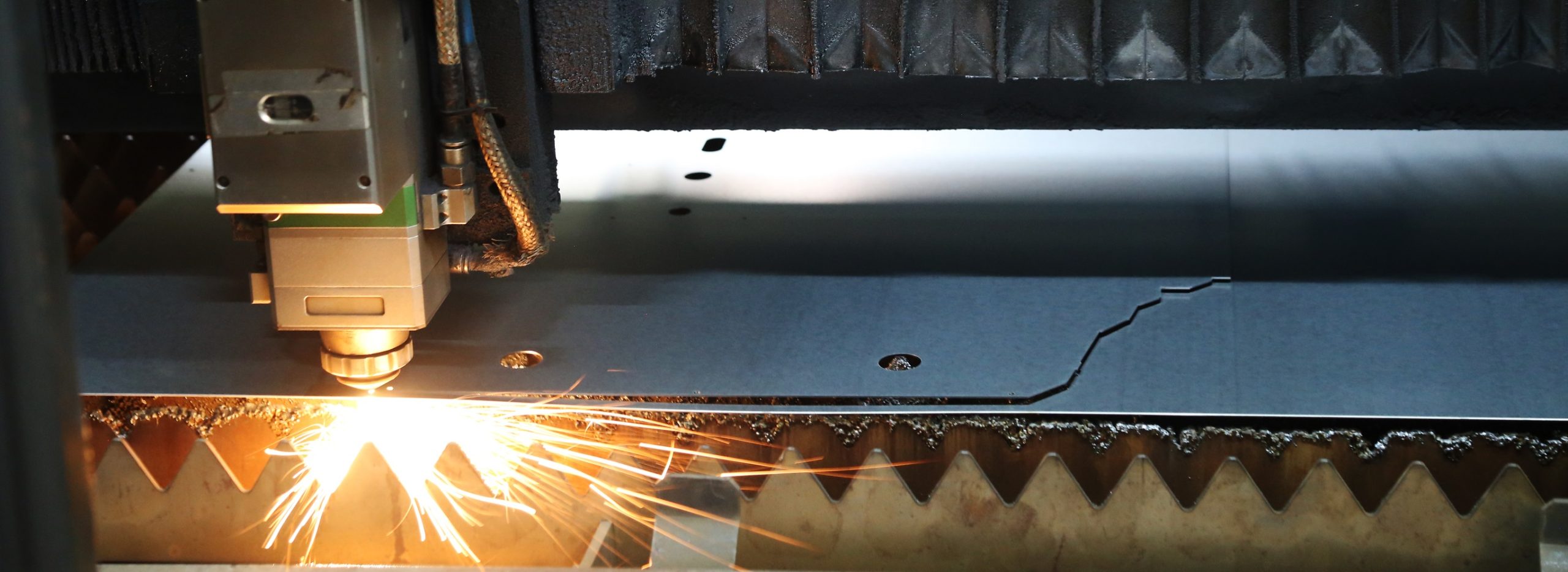
Advantages of Bending Centers
The sophisticated technological superiority of bending centers is manifested in the following dimensions:
1. Ultimate Automation and Unmanned Operation
This constitutes its core technological advantage.
- Automatic loading and unloading: Bending centers are integrated with six-axis or four-axis robots fitted with magnetic grippers or mechanical claws, which are capable of automatically grasping sheet metal from material stacks and conveying it accurately to the dies of bending machines.
- Automatic positioning and flipping: The bending of complex box-type or multi-sided workpieces entails repeated flipping and displacement operations. Traditional bending machines rely entirely on manual labor, which not only imposes high labor intensity on workers but also entails potential safety hazards. In contrast, the robotic systems of bending centers can execute pre-programmed motion sequences to automatically complete complex flipping, displacement and high-precision positioning operations with human-like dexterity.
- Automatic die changing system: This represents a revolutionary technological breakthrough. The replacement of upper and lower dies in traditional bending machines requires manual operation and typically takes dozens of minutes. Bending centers are equipped with an automatic die libraryand a die-changing robot; upon program switching, the system can automatically retrieve the required upper and lower dies from the die library and complete the installation within tens of seconds, achieving seamless product changeover.
2. High-level Intelligence and Integration
- Integrated control system: Bending centers integrate bending machines, robotic systems, automatic die changing systems and other core components under a unified numerical control system. Operators only need to input or import 3D graphics (e.g., DXF files), and the system software can automatically generate bending programs and robotic motion trajectories, enabling one-click programming.
- Real-time compensation and calibration: Advanced bending centers are equipped with angle sensorsand adaptive control systems, which can conduct real-time monitoring of bending angles and compare the actual values with the target parameters. In case of any deviation, the system will automatically adjust the bending depth or pressure to ensure the machining precision of each product—an achievement unattainable by manual operation.
- Data-driven management: The equipment can be interconnected with the factory’s Manufacturing Execution System (MES) or Enterprise Resource Planning (ERP) system, realizing real-time monitoring and centralized management of production data, order progress and die usage status.
3. Superior Production Flexibility and Efficiency
- Small-batch customized production: Owing to the extremely short production changeover time, bending centers can realize cost-effective production of small-batch even single-piece products, which perfectly aligns with the development trend of modern manufacturing industry featuring multi-variety, small-batch and short delivery cycle.
- 24/7 continuous production: When configured with a material library, bending centers can achieve long-term unmanned production in a lights-out factory mode, which substantially improves equipment utilization rate and overall production capacity.
4. Substantial Improvement in Product Precision and Consistency
- Elimination of human errors: The equipment completely eradicates such issues as inaccurate positioning and pressing errors caused by worker fatigue, emotional fluctuations and skill disparities in manual operation.
- Absolute consistency in machining precision: Robotic systems process workpieces in an identical manner and at a fixed position in each operation, ensuring absolute consistency in product quality from the first piece to the last, and thus significantly reducing the product rejection rate.
5. Remarkable Optimization of Working Environment and Safety
- Man-machine isolation: Operators are not required to work in the hazardous areas of bending machines (i.e., the vicinity of dies), completely eliminating the risk of hand crushing accidents.
- Reduction of labor intensity: The equipment liberates workers from arduous and repetitive physical labor, transforming their job roles into equipment monitors and program managers, and thereby enhancing the professional attractiveness of the positions.
Advantages and Advanced Features of Automatic Laser Welding in Safe Production
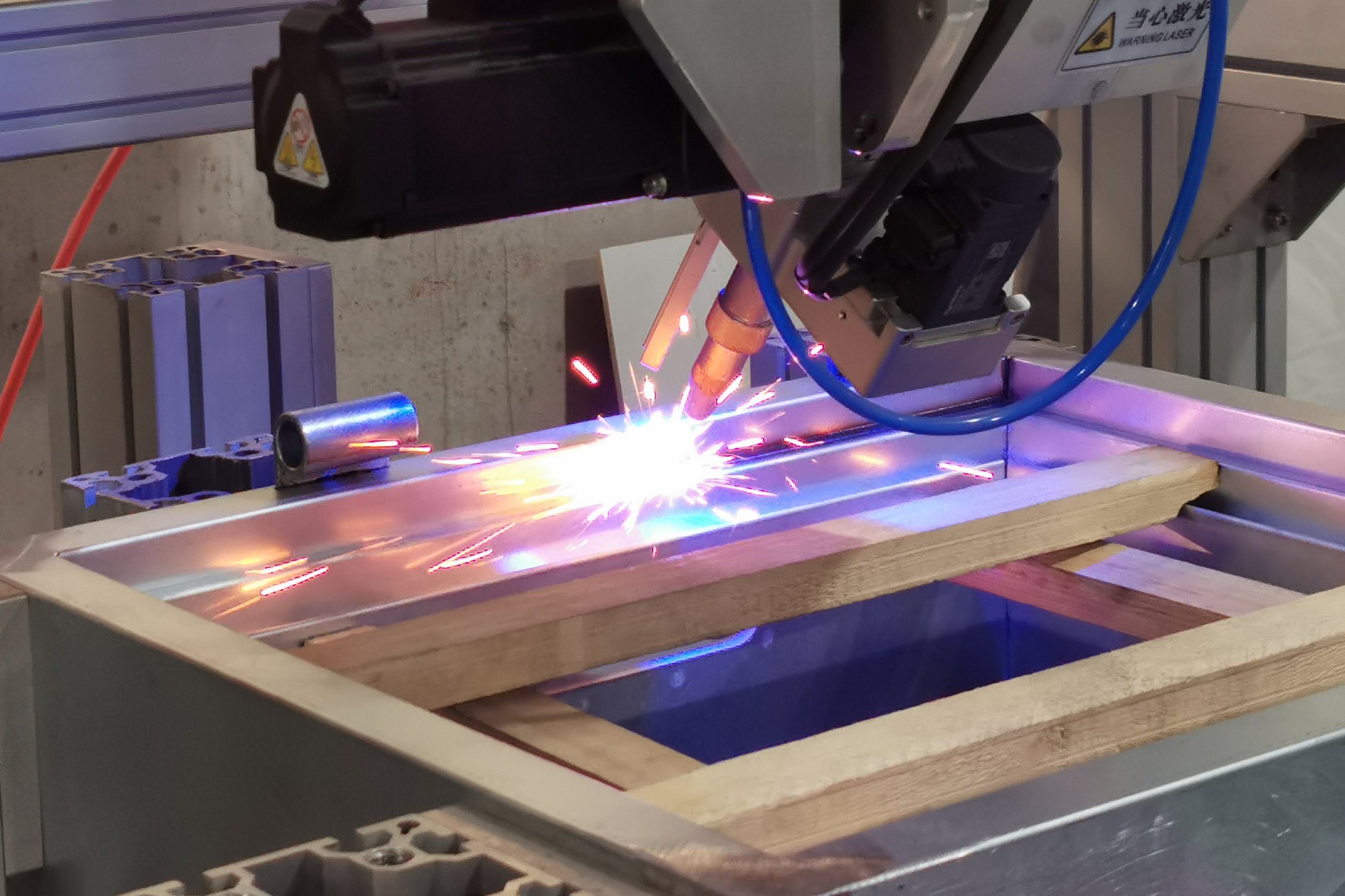
High weld strength and more stable structure
With an ultra-high energy density and a large weld depth-to-width ratio, the weld seam is narrow and deep. It can fully penetrate the steel plate of the safe cabinet in one pass, forming an almost integrated “molecular-level” bond, and the weld strength is close to or even equivalent to that of the base material (safe steel plate) itself. This prevents the weld seam from cracking easily when the safe is subjected to violent damage.
Minimal welding deformation and high dimensional accuracy
The heat-affected zone is extremely small with concentrated heat input, resulting in an ultra-low thermal input to other parts of the steel plate. As a result, after welding, the large cabinet plates of the safe hardly warp or deform, and can perfectly maintain their original square shape and dimensional tolerances.
Excellent sealing and anti-prying performance
It enables the formation of continuous, uniform and unbroken precision weld seams. For the fully welded structure required for high-protection safes (especially the joint between the door frame and the cabinet body), laser welding can achieve a perfect seal, completely eliminating the micro gaps that may exist in electric welding. This not only improves moisture, smoke and fire resistance, but also leaves no space for crowbars to be pried open.
Aesthetically pleasing weld seams
The weld seams are smooth, flat and aesthetically pleasing, presenting a fine fish-scale pattern or straight line. After welding, only simple grinding is usually required or the product can be directly sent to the powder coating/spray painting process, which greatly saves labor and material costs.
High efficiency
Integrated with industrial robots or precision CNC machine tools, it realizes fully automated production. A single workstation can operate continuously for 24 hours with a fast welding speed (2 to 10 times that of conventional electric welding), making it highly suitable for the large-scale and standardized production of safes.
Substantial savings in subsequent processing costs
Laser welding eliminates the correction processes caused by deformation and the extensive grinding and putty filling processes required for surface finishing due to its almost non-deformable and spatter-free characteristics. This is the key point where laser welding outperforms electric welding in terms of comprehensive costs.
Green and clean production
There is no weld spatter, and the emission of smoke and harmful gases is extremely minimal, which can be easily treated by dust removal equipment, complying with the environmental protection requirements of modern factories.
Advantages of Laser Cutting Machines Over Shearing Machines
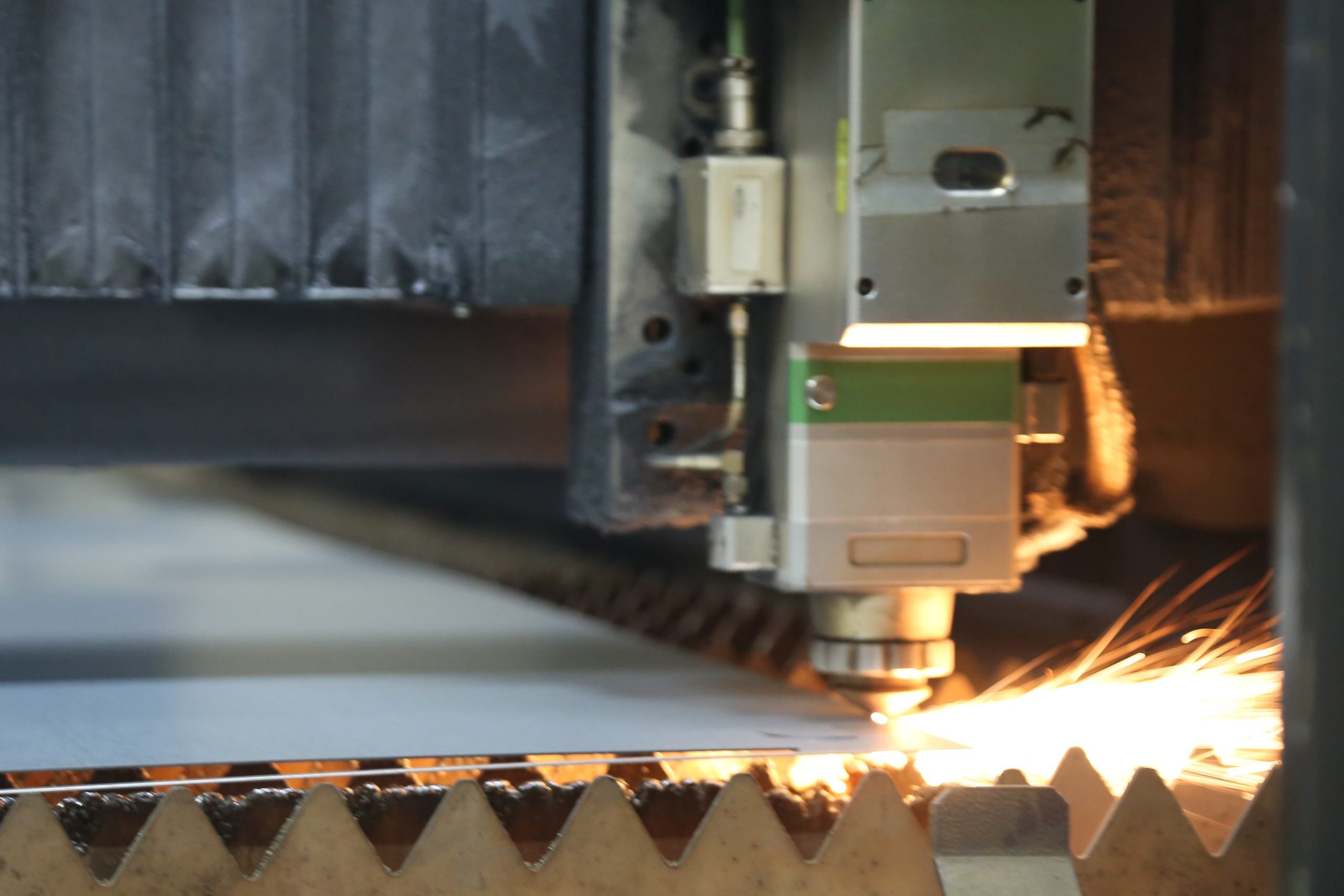
1.High Machining Precision
The advantages of laser cutting are extremely prominent. Traditional shearing machines rely on mechanical force for shearing, which inevitably causes burrs and deformation, with a typical machining precision of around ±0.5mm. In contrast, laser cutting is a non-contact machining method with no mechanical stress involved, resulting in smooth, burr-free cutting edges, a narrow heat-affected zone and minimal workpiece deformation. Its positioning precision can reach ±0.1mm or even higher, enabling the direct machining of high-quality parts that require no secondary finish machining.
2.Wide Range of Processable Materials
It can be widely applied to cold-rolled steel plates, hot-rolled steel plates, stainless steel plates, aluminum plates and copper plates, with a processable thickness ranging from 0.3mm to 12mm.
3.Flexible Production Low MOQ
The machining patterns are directly controlled by digital files (e.g., CAD files). Product changeover only requires program switching, achieving second-level product changeover, which is particularly suitable for small-batch, multi-variety customized production. This reduces the time required for manual adjustment of material stoppers and cutters when changing products on shearing machines, and simultaneously saves the costs of cutters and dies.
4.High Material Utilization Rate
With its flexible pattern nesting capability, laser cutting can minimize material waste and significantly improve the utilization rate of sheet metal, realizing the optimal utilization of raw material resources.
[text* your-name placeholder “Your Name”]
[email* your-email placeholder “Your Email”]
[text your-subject placeholder “Subject”]
[textarea your-message placeholder “Message”]
[submit “Send”]